













Casino Lab Online Casino Review For Canada

A practical look at Casino Lab for Canada players in 2026: registration, payments, game flow, limits, and support.

Fortune Gems 2 Slot

Table of Contents

  • The Dog House Megaways Slot
  • Lucky Joker 10 Extra Gifts Slot
  • Sword of Ares Slot
  • Floating Dragon Hold & Spin Slot
  • Leprechaun Riches Slot
  • Fruit Cocktail Slot
  • The Dog House Megaways Slot
  • Sword of Ares Slot
  • Fruit Million Slot
  • The Dog House Megaways Slot
  • Big Fisherman Slot
  • Big Fisherman Slot
  • Seven Books Unlimited Slot
  • Casino Lab Fortune Slot
  • Sword of Ares Slot
  • Floating Dragon Hold & Spin Slot
  • 9 Mad Hats Slot
  • Floating Dragon Hold & Spin Slot
  • Big Bass Splash Slot

Casino Lab Review: The 10-Minute Reality Check

Imagine you have a short break, open the lobby, and everything looks “fine” at first glance. Then you try to find your limits and suddenly you are digging through menus, clicking back, and losing patience. That first ten minutes is where the platform either earns trust or creates friction.

Reviews 1

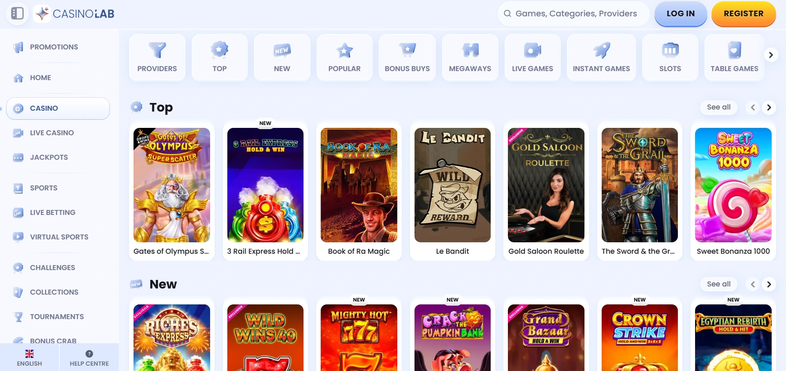
Start with the boring parts on purpose. Open the account area, look for transaction history, find the cashier, locate settings, and spot the help button. If you can answer “where is my money record?” in seconds, you will feel calmer later when you actually play.

A practical 2026 habit is to treat the first session like a test drive. You are not trying to maximize fun yet. You are checking whether actions have clear confirmations, whether screens refresh predictably, and whether you can stop and return without confusion.

In Canada, adult-only access and local rules are not just formal words. They show up in everyday flow: identity checks, payment confirmations, and responsible play tools. A platform that makes these controls easy to find tends to feel more reliable over time.

Navigation Test: Where Limits And History Live

Picture this: you finish a quick deposit, jump into a game, and later you are unsure whether you funded once or twice. On a calm platform, you open history and the answer is right there. On a messy platform, you guess, refresh, and stress yourself out for no reason.

Do a navigation test before you play any game. Find your history page, then find the area where you can set spending caps and time reminders. If those tools are buried, you will probably skip them when you are excited, which is exactly when you need them most.

A small trick that helps: sign out and sign back in once after you locate everything. If the menu feels consistent and you can return to the same pages quickly, the platform is behaving predictably.

What Feels Smooth On Mobile Versus Desktop

Imagine you start on your phone during a commute and continue later on a laptop. The buttons move, the menu collapses, and the same setting can be one tap deeper on mobile. That difference is normal, but it can still surprise players who expect identical layouts.

Use mobile for quick sessions and desktop for longer, calmer play, but keep your routine identical across devices. Check balance, check history, set a timer, then play. When your routine stays the same, the device matters less.

If you notice you tap faster on mobile, that’s your cue to lower stakes and shorten sessions. Small screens make decisions feel instant, and instant decisions can turn entertainment into impulse.

customer feedback 2

Account Setup And First Deposit Without Drama

Imagine you register while multitasking: messages pop up, you rush through fields, and you tell yourself you will fix details later. Later arrives at the worst possible time, usually right when you want to withdraw. Clean setup is less about paperwork and more about protecting your future self.

Start with accurate details and keep them consistent with your everyday documents and payment information. Avoid creative spelling, avoid “temporary” addresses, and avoid switching names between formats. Consistency reduces delays and makes support conversations simpler.

Now picture your first deposit as a confidence test, not a commitment. Choose an amount that fits your entertainment budget and gives you room to observe how the cashier behaves. You’re learning the flow: confirm, see the record, then play.

A common mistake is chasing a bonus and depositing more than planned. The offer can be tempting, but your boundaries matter more than any promotion. Deposit what you intended to spend anyway, then treat any extra as extended play time, not as a reason to raise stakes.

Also, do not mix too many changes at once. If something looks off - a page refreshes strangely or a setting does not save - change one thing, observe, then proceed. Rapid switching between devices, methods, and settings creates confusion you cannot easily untangle later.

Finally, separate “account maintenance” from “session time.” Set up security, limits, and preferences when you’re calm. Then play when everything is ready. That separation is one of the cleanest adult habits in 2026.

Verification Readiness For Legal-Age Play

Imagine you request a payout and suddenly the platform asks for identity confirmation. You feel surprised, then annoyed, and you start searching your phone for documents at midnight under bad lighting. That is the messy path.

The cleaner path is to prepare in advance. Keep clear photos of documents stored safely on your device, taken in good light with readable text. When you submit, do it once, carefully, instead of sending blurry images and hoping they pass.

Avoid last-minute profile edits right before withdrawals. Even small changes can trigger extra checks. If you need to correct something, do it on a quiet day, confirm it’s saved, then return to play later.

Games And Session Pace: Picking Your Comfort Zone

Imagine you open a flashy slot, the animations are loud, and you start tapping quickly just to get to the next spin. Ten minutes later, you barely remember what you bet. That’s not “bad luck,” that’s a pace problem.

3 reviews

Choose games you can read on your screen. You want clear bet controls, visible balance, and an easy way to open game information. If a game feels cramped or confusing, switch instead of forcing yourself to adapt mid-session.

Treat your stake like a pacing tool. Lower stakes often buy you more entertainment time, and entertainment time is the point. If you want to raise stakes, do it slowly and only after checking your mood and your history, not because a win made you feel invincible.

Casino Lab Trustpilot: Reading Feedback Like A Pro

Imagine you scroll a rating page and feel pulled in two directions at once: glowing praise on one side, angry complaints on the other. If you read it like a drama feed, you’ll leave more confused than informed. If you read it like a pattern hunt, it becomes useful.

Start by looking for repeated themes, not loud language. Do multiple people mention slow payouts, confusing promo terms, or support delays? Or do most comments focus on personal frustration without details? Patterns matter more than emotion.

A smart 2026 approach is to combine public feedback with your own tiny tests. Run a small deposit, check how history labels it, then try a modest withdrawal when you’re ready. Your personal record is the best anchor for judging what applies to you.

Also, remember that people mostly post when something goes wrong or when something surprises them. That doesn’t make the feedback worthless. It just means you should weigh it with context and look for consistency across many posts, not one dramatic story.

Casino Lab Review Trustpilot: Spotting Patterns, Not Noise

Picture a complaint that says “they stole my money” with zero details. Then picture another comment that describes a specific status label, a timeline, and a support conversation. One is noise, the other is data.

When you read feedback, separate three buckets: payments, promotions, and support. Payments stories often mention pending status, verification steps, or method mismatches. Promotions stories usually revolve around misunderstanding terms and game eligibility. Support stories show whether issues get resolved or loop in circles.

Watch for timing. Many payout complaints happen after a player changes payment methods, edits profile details, or tries to withdraw immediately after a large win. That doesn’t “excuse” delays, but it does explain why consistency matters.

Finally, check your own behavior against the pattern. If the repeated issue is “people rush and then get stuck,” your solution is not panic - it’s routine: stable details, consistent method, and calm tracking in history.

How To Weigh Delays, Bonuses, And Support Stories

Imagine you read ten comments about delays and you instantly assume the worst. Then you notice half of them mention changing details during a cashout or trying multiple methods at once. The real lesson becomes practical: avoid creating unnecessary variables.

Use support stories to judge structure. Do players mention clear categories, useful instructions, and problem-solving steps? Or do they describe generic replies and endless back-and-forth? A structured support flow usually means fewer headaches when something needs attention.

As for bonus complaints, look for the hidden theme: confusion. Promotions are rarely “mysterious,” they’re usually misunderstood. If you prefer simple sessions, pick simple offers and skip anything that feels like homework.

Your Own Notes: A Mini Checklist After Every Session

Imagine you finish playing and you honestly can’t answer whether you’re up or down because the session blurred together. That’s the moment to build a tiny habit: write down what you deposited, how long you played, and how you felt at the end.

Check history once after each session. Confirm the deposit record, confirm any withdrawals requested, and then close the loop by signing out. This turns gambling into a contained activity instead of an open tab in your mind.

If you notice you keep playing when tired or stressed, that’s valuable data. Use it to set a time boundary for future sessions. The platform can offer tools, but your routine is what makes them work.

Payments, Cashouts, And Bankroll Boundaries

Imagine your deposit goes through, the screen refreshes, and your thumb hovers over the button again because you want certainty. On mobile, that impulse can create duplicate charges fast. The best payment habit is slow and deliberate: confirm once, verify in history, then move on.

Start with one payment route and use it consistently until you understand how it behaves on your account. Consistency builds predictability. Predictability reduces anxiety. Switching methods every session turns every session into an experiment, and experiments are stressful when money is involved.

Withdrawals deserve their own mindset. Deposits are built to feel instant. Payouts can involve safety checks, method processing steps, and verification requirements. Your job is not to chase speed at all costs. Your job is to track status calmly and keep your account stable.

Budget limits are not optional if you want gambling to remain entertainment. Set a deposit limit, set a session timer, and decide what you do when either one is reached. When the limit is pre-set, you stop negotiating with yourself mid-session.

Here’s a practical table of what to watch in the money flow, using plain language and avoiding marketing labels.

Enter The Money Flow

What to check

Why It Helps

Common Mistake

Funding Confirmation

Amount and method match your plan

Prevents accidental repeats

Tapping twice during slow loading

History Record

A dated entry appears quickly

Removes guesswork

Trusting only the game balance

Status Labels

Pending vs processed indicators

Reduces stress while waiting

Refreshing and panicking

Method Consistency

Same payout route used regularly

Keeps cashouts smoother

Switching methods right before a payout

Limits And Timers

Caps are active before play

Protects your budget

Setting limits only after overspending

Support Notes

You know what details to share

Speeds resolution

Messaging support without specifics

Small First Withdrawal As A Confidence Test

Imagine you try to cash out a large amount as your very first payout, then you watch the status like it’s a countdown. That creates pressure. A smaller first withdrawal is calmer because it teaches you how the flow behaves without high stress.

Request the payout once, note the status in history, then check later at a planned time. Avoid changing profile details or payment settings while the request is active. Stability makes everything easier to trace and resolve.

If you ever need support, provide a simple report: time, amount, method, device, and what the status label shows. Clear details turn your message into a solvable task.

When To Use Time-Out Or Self-Exclusion Tools

Imagine you feel yourself chasing a result and saying “one more” while your body feels tense. That’s not entertainment anymore. That’s a cue to use a break tool, not a cue to increase stakes.

Time-out options work best when you use them early, the moment you notice rushed decisions or irritation. Self-exclusion tools are stronger boundaries for recurring patterns over weeks, not a dramatic last step for a single bad night.

Treat these tools as guardrails for adults, not as punishment. You are protecting your routine, your budget, and your mood. When gambling stays inside those boundaries, it stays lighter.

Casino Lab Reviews: What Canada Players Mention

Imagine you ask a friend about a platform and they don’t talk about graphics, they talk about friction. “It was easy to find the cashier.” “Support answered fast.” “I got confused by a promo.” That’s the kind of feedback that actually matters for real play.

Across player commentary, the most useful themes are usually practical: clarity of the account area, predictability of payment records, and how well the platform helps people control sessions. When those basics are strong, players tend to describe the experience as smooth. When they are weak, complaints tend to repeat the same points: unclear status, confusing terms, or slow problem resolution.

Use that insight to build your own approach. Don’t aim to “trust” a platform blindly. Aim to verify it with small, low-stress actions: test navigation, do a modest deposit, check history, set limits, then play. If you can repeat that cycle comfortably, you’ve done the real work.

Canada players also benefit from keeping a clean separation between play and maintenance. Do settings, verification steps, and payment preferences when you’re calm. Play only when those are settled. This simple separation prevents the most common self-inflicted issues.

If you ever feel your sessions are getting longer, faster, or more emotional, treat that as a signal to tighten boundaries. Set a shorter timer, reduce stakes, or take a break. A platform can offer tools, but the healthiest results come from using them consistently.

FAQ

Start with the essentials: find transaction history, locate limits, and locate support before you open any game. Imagine you deposit and later feel unsure whether it processed - history removes guesswork instantly. Set a session timer and a funding cap right away so your first session stays controlled. If you can find these pages quickly, the rest of the platform usually feels easier to manage.

Slow down at the confirmation screen and treat it like a bank transfer step. Imagine the page loads slowly and your thumb wants to tap again - that’s when duplicates happen. Confirm once, then check the history entry before doing anything else. If the status shows pending, wait briefly and check again instead of repeating the action.

Deposits are designed to be quick, while payouts may involve security checks and processing steps that differ depending on the circumstances. For example, if you request a payout immediately after changing your profile details or switching payment methods, this could trigger additional verification. Maintain account stability, use a consistent payment method, and monitor status labels in your transaction history rather than refreshing frequently. If you require assistance, contact support with specific details regarding the time, amount, and status.

Consider whether you would enjoy the gaming session even without the promotion. For instance, if you accept an offer and immediately feel compelled to play more or spend beyond your initial budget, it's not a good fit. Opt for straightforward offers with clear terms and avoid anything that seems unclear upon first reading. Your personal limits are more important than any additional funds.

Submit a single message containing all the necessary information: your action, your expectation, what occurred, and what your transaction history indicates. For example, sending a message stating only "it failed" without specifying the time, amount, or method will lead to follow-up questions and delays. Include your device type and any visible status label from the transaction record. Afterward, refrain from modifying your account details while the issue is under review.

Use it the moment you notice rushed decisions, irritation, or chasing. Imagine you keep saying “one more” while feeling tense - that’s a clear signal to pause. A short time-out can reset your head faster than any betting adjustment. If the same pattern repeats over weeks, consider a longer self-exclusion window and rebuild your routine around shorter, calmer sessions.

Plan the session like a movie: set a budget, set a timer, and decide your stop point before you start. Imagine you play without boundaries and time disappears - that’s when regret shows up. Use limits and reminders so the session ends when your plan ends, not when emotions decide. If it stops feeling fun, stop, take a break, and come back only when you feel clear.

🇬🇧 English